.png)


_edited_edited_edited.png)
When It’s Not Anxiety: Understanding Autonomic Symptoms in POTS, hEDS, and Dysautonomia

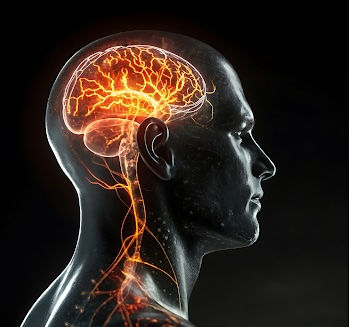
For many people living with chronic illness, the most damaging experience is not the symptoms themselves. It is being told those symptoms are “just anxiety.”
While anxiety can absolutely coexist with medical conditions, it is not an adequate explanation for widespread, multisystem dysfunction. In conditions such as Postural Orthostatic Tachycardia Syndrome (POTS), hypermobile Ehlers–Danlos syndrome (hEDS), Mast Cell Activation Syndrome (MCAS), cervical instability, and related forms of dysautonomia, the autonomic nervous system is often the primary driver of symptoms.
Autonomic dysfunction is frequently mistaken for anxiety because both can involve changes in heart rate, breathing, temperature, and adrenaline. The difference is not subtle at a physiological level. One is driven by emotional processing. The other is driven by impaired nervous system regulation.
Understanding that distinction changes everything. Diagnosis improves. Treatment becomes more targeted. And patients stop being dismissed for symptoms their bodies are generating in very real, measurable ways.
When Symptoms Are Labeled “Just Anxiety”
Patients with dysautonomia are often told their symptoms are anxiety-based because the presentation does not fit neatly into one organ system. Symptoms may fluctuate. Testing may appear “normal.” Episodes may come on suddenly.
From the outside, this can look psychological.
From the inside, it feels anything but.
Autonomic dysfunction produces objective physiological changes that affect circulation, digestion, temperature regulation, breathing patterns, and sensory processing. These changes are not voluntary. They are not imagined. And they do not resolve through reassurance alone.
When clinicians lack training in autonomic physiology, anxiety becomes a default explanation rather than a differential diagnosis.
What the Autonomic Nervous System Controls
The autonomic nervous system regulates involuntary processes that keep the body stable in changing environments. This includes:
Heart rate and blood pressure
Blood vessel constriction and dilation
Gastrointestinal motility and secretion
Temperature regulation and sweating
Bladder function
Breathing patterns and CO₂ tolerance
Hormonal and adrenal signaling
Sensory gating and threat detection
Sleep–wake cycling
When autonomic regulation is impaired, symptoms rarely stay confined to one system. Instead, they appear diffuse, episodic, and context-dependent, which is exactly why they are so often misunderstood.
Common Autonomic Symptoms Misdiagnosed as Anxiety
Below are symptoms frequently labeled as anxiety or panic despite having well-established autonomic mechanisms.
Temperature Intolerance
Sudden overheating, flushing, or cold sensitivity without environmental triggers reflects impaired vasoconstriction, vasodilation, and sweat regulation. This is a vascular control issue, not emotional dysregulation.
Gastrointestinal “Storms”
Nausea, bloating, early satiety, constipation, diarrhea, or alternating bowel patterns stem from disrupted enteric nervous system signaling. These symptoms often worsen with upright posture, stress on circulation, or autonomic overload.
Bladder Urgency or Retention
Autonomic imbalance can cause inappropriate detrusor activation or inhibition. Patients may experience constant urgency, incomplete emptying, or sudden retention without infection or structural findings.
Sensory Overload
Light, sound, motion, and visual complexity can provoke dizziness, nausea, or cognitive fatigue. This reflects altered sensory gating and vestibulo-autonomic integration rather than anxiety sensitivity.
Adrenaline Surges (“Adrenaline Dumps”)
Sudden tachycardia, tremors, internal shaking, sweating, or a sense of impending doom often occur while the patient feels emotionally calm. These episodes are driven by sympathetic overactivation and catecholamine release.
Blood Sugar–Like Symptoms in Non-Diabetic Patients
Autonomic dysfunction can alter cortisol, epinephrine, and insulin signaling, producing shakiness, weakness, sweating, and lightheadedness that mimic hypoglycemia.
Pupillary Changes
Unpredictable dilation or constriction of pupils reflects disrupted sympathetic–parasympathetic balance and often contributes to headaches, eye strain, and visual discomfort.
Air Hunger
A persistent need to sigh or take deep breaths is commonly related to dysfunctional breathing patterns, altered CO₂ tolerance, and vagal dysregulation. It is uncomfortable and alarming, but not anxiety-driven.
Asymmetric Blood Flow or Temperature Changes
Cold hands with a warm core, one-sided flushing, or uneven temperature changes indicate impaired peripheral vascular control.
Sleep Disturbance
Nighttime tachycardia, frequent awakenings, vivid dreams, and unrefreshing sleep reflect failure of parasympathetic dominance during rest cycles.
Why Autonomic Symptoms Feel Random — But Aren’t
Autonomic symptoms are often described as unpredictable because the triggers are not always obvious. Posture, hydration status, temperature, sleep debt, hormonal shifts, inflammation, sensory load, and mechanical instability can all influence autonomic output.
When these variables are not accounted for, symptoms appear to come “out of nowhere.” In reality, they follow physiological rules that are simply overlooked in traditional care models.
Conditions Commonly Linked to Autonomic Dysfunction
Autonomic symptoms may be primary or secondary to several overlapping conditions, including:
Cervical or craniocervical instability
Venous outflow obstruction
Hormonal and hypothalamic dysregulation
These conditions frequently coexist, amplifying symptom complexity and making reductionist explanations particularly harmful.
How Physical Therapy Approaches Dysautonomia Differently
From a rehabilitation perspective, treating dysautonomia is not about pushing conditioning or “powering through.” It requires respecting nervous system readiness.
Effective physical therapy approaches often include:
Breath training to improve CO₂ tolerance and vagal tone
Positional progression to safely reintroduce orthostatic stress
Autonomic pacing rather than symptom-driven exertion
Rib cage and pelvic mechanics to support respiration and circulation
Nervous system regulation strategies to reduce sympathetic dominance
When applied correctly, physical therapy becomes a tool for restoring regulation rather than triggering flares.
Why Accurate Diagnosis and Language Matter
Mislabeling autonomic dysfunction as anxiety has consequences. It delays diagnosis, leads to inappropriate treatment, erodes patient trust, and allows symptoms to worsen through deconditioning and unmanaged instability.
Recognizing autonomic symptoms for what they are does not invalidate mental health. It clarifies physiology. And clarity is what allows patients to receive care that actually matches their biology.
Conclusion
Autonomic dysfunction is not anxiety in disguise. It is a complex, multisystem physiological condition that deserves informed, nuanced care.
When clinicians understand autonomic regulation, symptom patterns stop looking random. When patients are believed, treatment becomes possible. And when the nervous system is addressed directly, people finally begin to stabilize.
The more we replace dismissal with understanding, the fewer patients will be told that their lived experience is “all in their head.”
References
Cleveland Clinic. (n.d.). Dysautonomia. https://my.clevelandclinic.org/health/diseases/6004-dysautonomia
Dysautonomia International. (n.d.). Dysautonomia information and patient resources. https://www.dysautonomiainternational.org
Ehlers-Danlos Society. (n.d.). Dysautonomia and Ehlers-Danlos syndromes. https://www.ehlers-danlos.com
Johns Hopkins Medicine. (n.d.). Postural orthostatic tachycardia syndrome (POTS). https://www.hopkinsmedicine.org/health/conditions-and-diseases/postural-orthostatic-tachycardia-syndrome-pots
National Institute of Neurological Disorders and Stroke. (n.d.). Autonomic disorders. https://www.ninds.nih.gov/health-information/disorders/autonomic-disorders
Raj, S. R. (2013). Postural tachycardia syndrome (POTS). Circulation, 127(23), 2336–2342. https://doi.org/10.1161/CIRCULATIONAHA.112.144501
Vanderbilt Autonomic Dysfunction Center. (n.d.). Postural orthostatic tachycardia syndrome. https://www.vumc.org/autonomic-dysfunction-center/postural-orthostatic-tachycardia-syndrome
Disclaimer:
This article is for educational purposes only and does not constitute medical advice. Always consult a qualified healthcare professional for diagnosis and individualized care.


I liked the practical nature of this information. A username font generator can be helpful when creating a distinctive identity for gaming platforms, forums, and social networks. Trying different lettering styles gives users a chance to make their username recognizable while keeping it reasonably readable.
Coffee discussions should distinguish potential advantages from exaggerated claims, so I appreciated the balanced treatment of coffee health benefits alongside practical reminders about moderation. That approach keeps the topic informative without turning a drink into a miracle cure for everyone.
I was checking Diu win game online and wanted to know if the experience is the same on browser and the app. Is there any difference in speed, result updates, or features between both options?
I was checking DMwin online and wanted to know if the experience is the same on browser and the app. Is there any difference in speed, result updates, or features between both options?
I’m seeing DMwin download mentioned in a few places, so I wanted to check it out. Before using it regularly, can anyone confirm if it works properly on Android devices and whether it requires any verification
I tried Dm win login but the page was taking time to load. Is this a common issue during busy hours, or does it depend on internet connection? If anyone knows, please reply.
I’m having a bit of confusion about the Diuwin Gift Code. Does it require OTP verification every time, or only during the first login? Also, what should we do if OTP doesn’t arrive on time? I recently came across Diu win and I’m trying to understand how it works. Is it suitable for beginners, or does it require some experience to understand the process properly? If anyone has tried it, please share basic guidance.
I wanted to try the Diuwin game login but I’m not sure if it works smoothly on all Android devices. Does anyone face loading issues or slow performance during peak hours? Any suggestion would be helpful.